Test Systems
GtestWorks Automated Testing Platform
VectWorks 3.0 Electrical Performance Test Software


Electromagnetic Compatibility (EMC) refers to the ability of electrical equipment or systems to operate without causing electromagnetic interference to their environment or being susceptible to such interference. As a critical quality benchmark, EMC compliance should be addressed during the initial product design phase through cost-effective countermeasures. By definition, EMC comprises Electromagnetic Interference (EMI) and Electromagnetic Susceptibility (EMS).
Electromagnetic Compatibility (EMC) refers to the ability of electrical equipment or systems to operate without causing electromagnetic interference to their environment or being susceptible to such interference. As a cr···
Electromagnetic Compatibility (EMC) refers to the ability of equipment or systems to operate normally in their electromagnetic environment without generating unacceptable electromagnetic interference to other devices in that environment. Its core consists of two interrelated requirements: first, controlling the electromagnetic interference (EMI) generated by the equipment itself; second, enhancing the equipment's immunity to external electromagnetic interference (Electromagnetic Susceptibility, EMS).

The core essence of Electromagnetic Compatibility (EMC) refers to the ability of electronic equipment to function normally in an electromagnetic environment without causing interference to other devices. As a technical means to evaluate this capability, EMC testing verifies the electromagnetic compatibility of equipment through scientific methods, serving as a crucial technical link to ensure the collaborative operation of electronic systems.
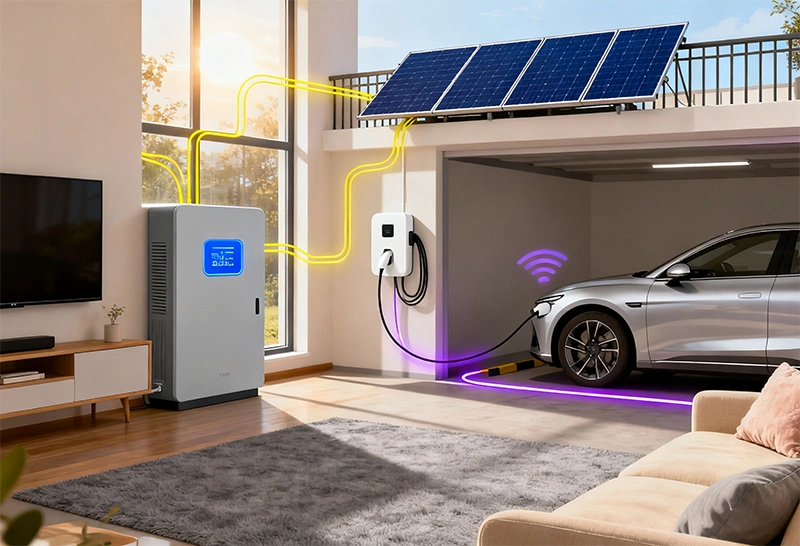
Household PV-storage-charging products integrate various power electronic devices such as photovoltaic inverters, power conversion systems (PCS), and charging modules. Their internal high-frequency switching actions (e.g., IGBT switching frequency harmonics) and complex topologies are prone to generate electromagnetic interference (EMI). Core components within such equipment (such as high-frequency switching transistors, inductors, capacitors, and control circuit boards) produce high-frequency harmonics and switching noise during operation, which may form electromagnetic disturbances through conduction or radiation paths.
With the rapid development of 5G communication technology and the Internet of Things (IoT), wireless interconnection functions of electronic devices have become widely popular in smart home appliances, leading to an increasingly complex electromagnetic environment. Household appliances (such as refrigerators, air conditioners, washing machines, etc.), due to the integration of wireless modules like Wi-Fi and Bluetooth, may not only generate high-frequency noise or conducted interference during operation but also need to resist electromagnetic radiation from mobile phone base stations and other smart devices, making their Electromagnetic Compatibility (EMC) issues increasingly prominent.
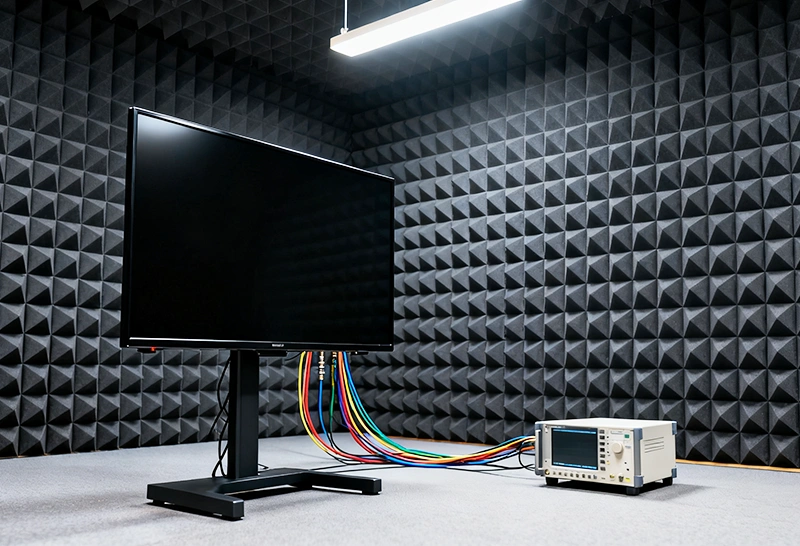
Electromagnetic Compatibility (EMC) refers to the ability of electronic equipment or systems to function properly in their electromagnetic environment without causing unacceptable electromagnetic disturbances to anything in that environment. Its core encompasses two interrelated technical dimensions: Electromagnetic Interference (EMI) and Electromagnetic Susceptibility (EMS). EMI refers to the electromagnetic disturbances released by equipment during operation into the surrounding environment, while EMS refers to the equipment's ability to resist external electromagnetic disturbances.
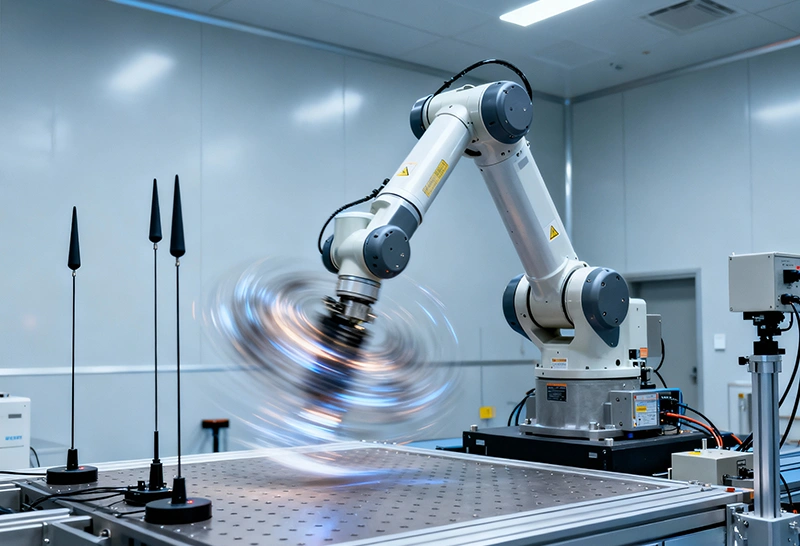
Modern military equipment is highly dependent on electronic systems, from navigation and positioning, communication and command, to precision-guided weapons. Electromagnetic interference can directly weaken combat capabilities by blocking spectrum, misleading signals, or causing physical damage.
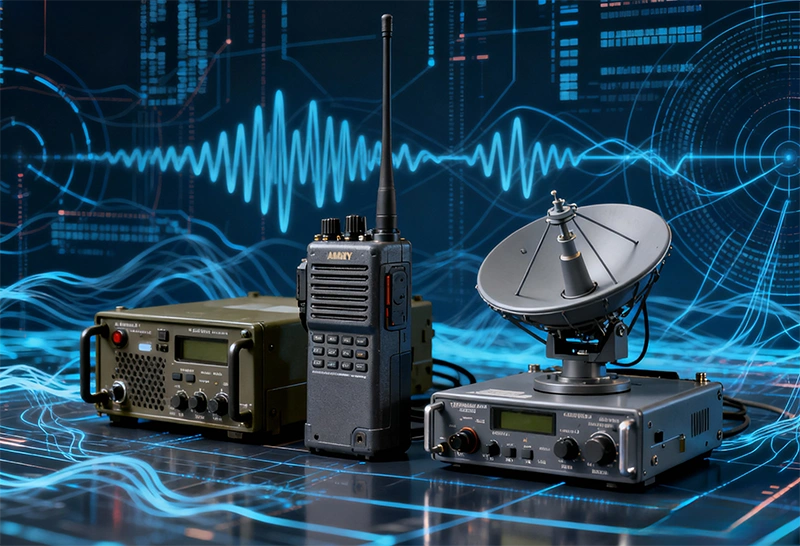
In recent years, the low-altitude aircraft industry has experienced explosive growth, with its application scenarios rapidly expanding from traditional military fields to more than 20 vertical sectors including civilian logistics, agricultural plant protection, urban security, and emergency rescue. According to statistics from the Civil Aviation Administration of China, the average daily flights of low-altitude aircraft surged from 120,000 in 2023 to 850,000 in 2025, with an average annual growth rate of 38%. It is projected that the global low-altitude economy market size will exceed $2.1 trillion by 2030.

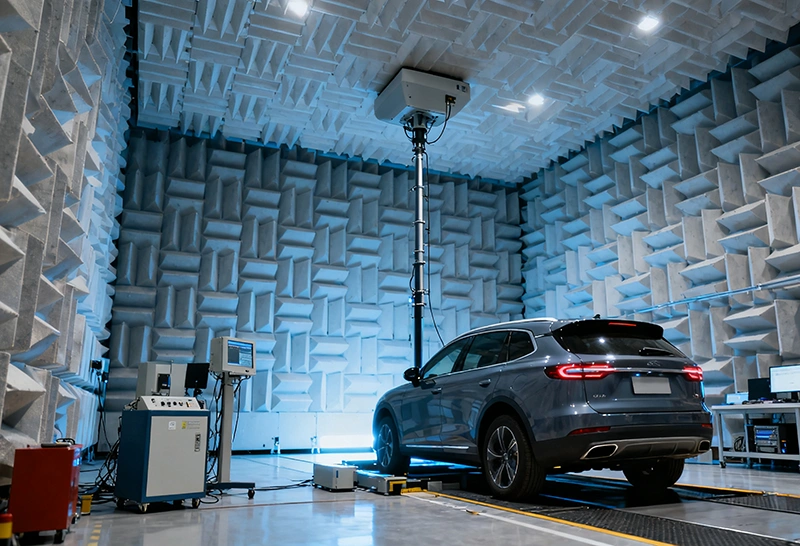
As the core component of the power distribution system in new energy vehicles, the electromagnetic compatibility (EMC) of the Vehicle PDU (High Voltage Power Distribution Unit) is directly related to the safety and reliability of the entire vehicle. This article systematically analyzes the necessity of EMC testing, including regulatory compliance requirements, product reliability assurance, and market access needs. It provides a detailed comparison of the latest domestic and international standard systems (such as CISPR 25:2021 and GB/T 18655-2025), elaborates on core test items such as conducted emissions, radiated emissions, radiated immunity, and bulk current injection (BCI).
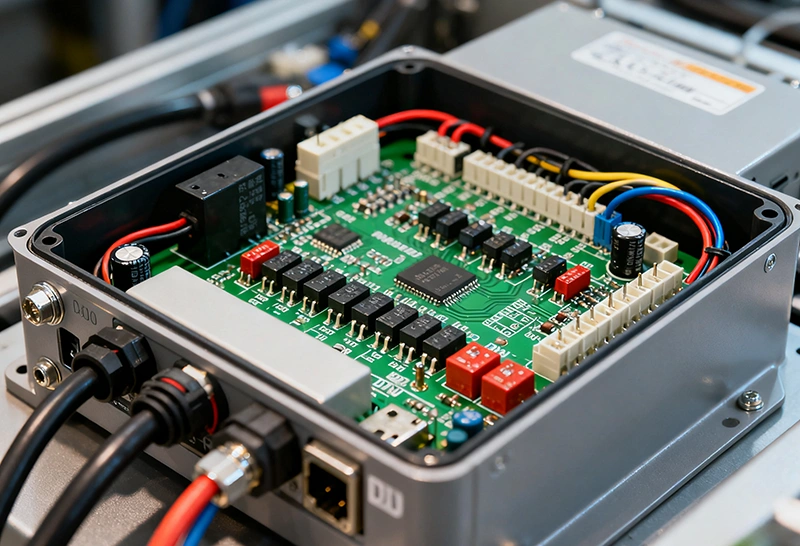
The electromagnetic compatibility testing of vehicle OBCs must meet multi-level regulatory requirements from international to enterprise levels. The revision and implementation timelines of standards directly affect the product launch cycle and compliance. Regulatory requirements exhibit a clear hierarchical progression structure: international standards form the basic framework, regional standards are the market access threshold, and enterprise standards further refine technical requirements.
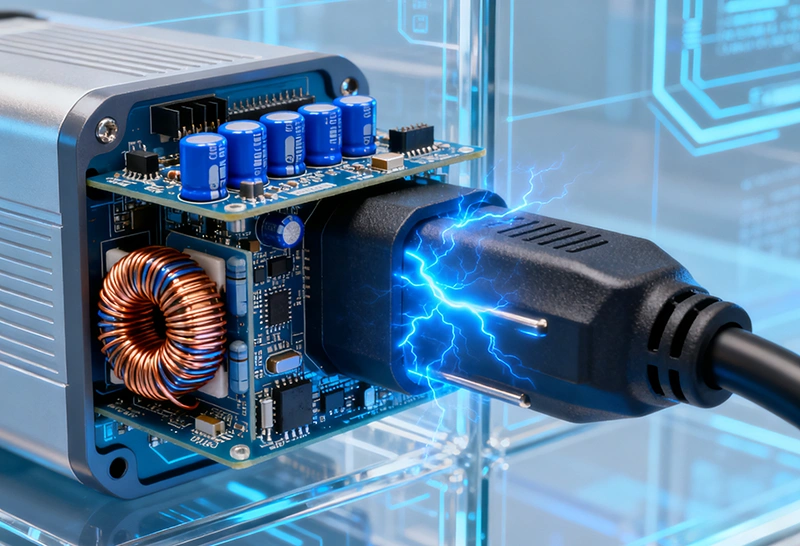
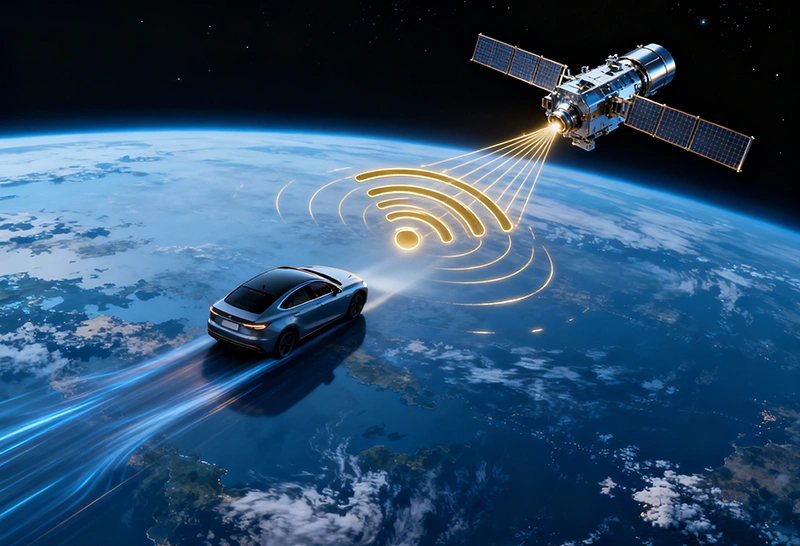
With the rapid development of intelligent connected vehicles and autonomous driving technology, the Global Navigation Satellite System (GNSS), as the core component of location services, has become a key device for intelligent driving. Its positioning accuracy and reliability are directly related to vehicle safety. GNSS is irreplaceable in safety functions such as Accident Emergency Call Systems (AECS) and serves as an important foundation for ensuring vehicle safety operation.