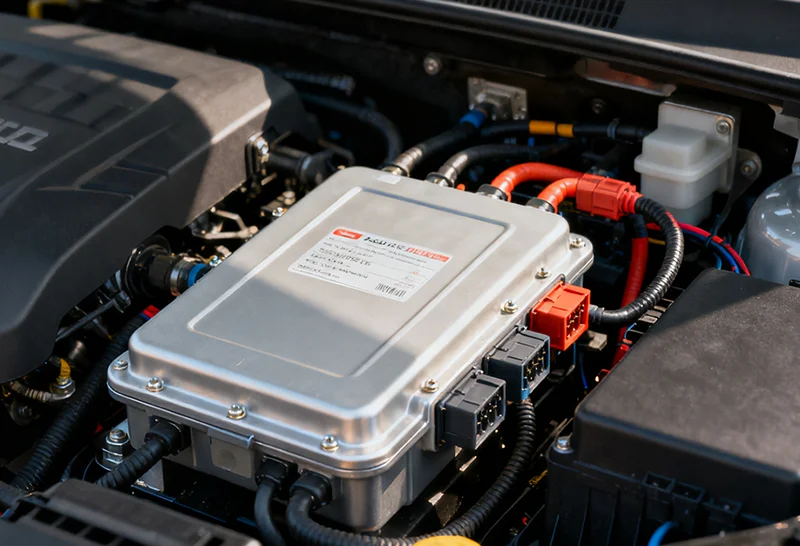
According to the International Energy Agency (IEA) forecast, the global fleet of pure electric vehicles (EVs) and hybrid electric vehicles (HEVs) on roads will reach 250 million by 2030. In 2018, IEA reported only 5.1 million such vehicles worldwide. This represents a dramatic increase, driven by mutually reinforcing technological advances in powertrains, power electronics, battery cells/packs, and charging infrastructure.
According to the International Energy Agency (IEA) forecast, the global fleet of pure electric vehicles (EVs) and hybrid electric vehicles (HEVs) on roads will reach 250 million by 2030. In 2018, IEA reported···
The ISO 16750 series applies to electrical and electronic systems/components of road vehicles. It describes potential environmental stresses and specifies tests and requirements for specific installation locations on vehicles. Its purpose is to help users systematically define and/or apply an internationally recognized set of environmental conditions, tests, and operational requirements based on the intended equipment operation and actual exposure environments.
During the development of the ISO 16750 series, the following environmental factors affecting vehicles were considered: global geography and climate, vehicle types, vehicle usage environments and operational modes, equipment lifecycle, vehicle supply voltage, and in-vehicle installation locations.

One-line positioning: China's first mandatory national standard for L3/L4 automated driving systems, issued on July 30, 2026 and effective July 1, 2027, fully replacing GB/T 44721-2024 Intelligent and Connected Vehicle - General Technical Requirements for Automated Driving System. Advanced automated driving moves from "manufacturers' own claims" into an era of mandatory state regulation, establishing a unified safety access baseline for automated driving products.
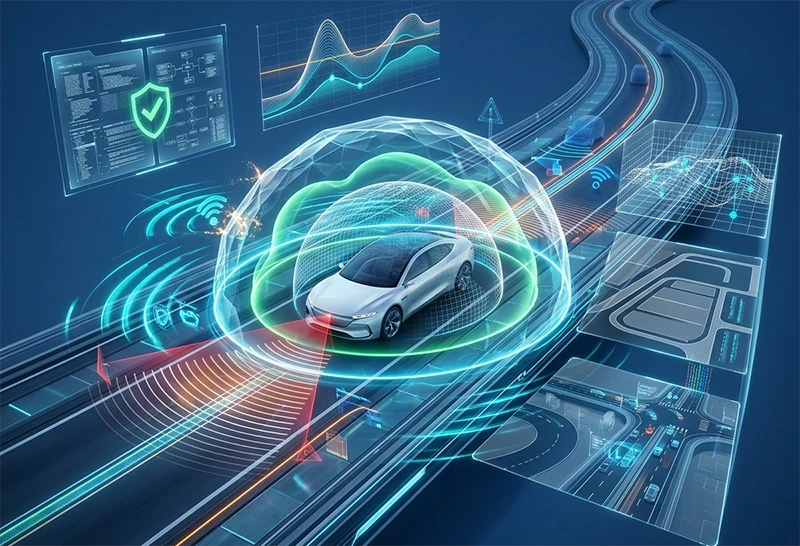
One-line positioning: China's first integrated quality and defect management standard covering the entire automotive software lifecycle. Applying the PDCA cycle and risk-based thinking, it moves automotive software quality control from "post-incident handling" toward "defect prevention", effective December 1, 2026.
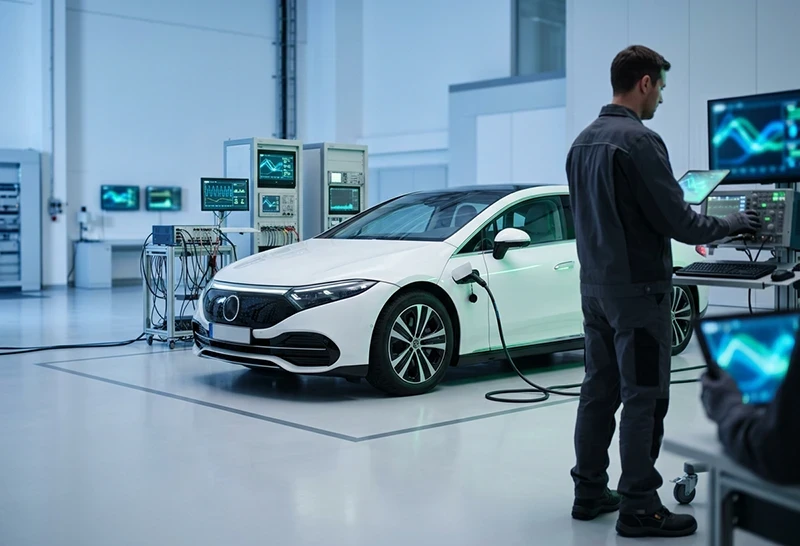
GB 44721-2026 is China's first mandatory national standard for L3 (conditional automated driving) and L4 (high automated driving) systems. It was organized and formulated by the Ministry of Industry and Information Technology, approved and issued on July 30, 2026, and takes effect on July 1, 2027. Upgraded from the recommended national standard GB/T 44721-2024, it changes from "recommended adoption" to "mandatory strict implementation," building a complete closed-loop system of "technical requirements — assurance requirements — inspection methods — type determination," and establishing a unified safety baseline for automated driving product access.
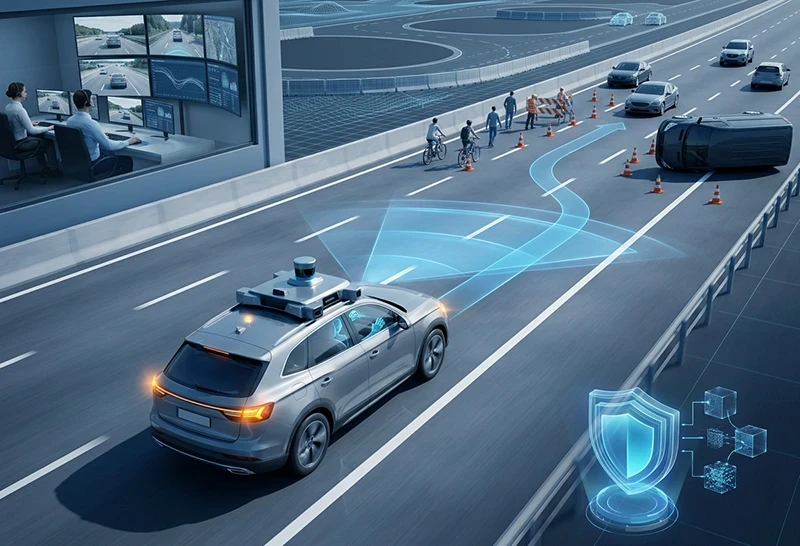
The hard part of ripple testing is not injecting a sine wave onto a power line. The hard part is proving that the correct waveform, under the correct standard version, at the correct location, with the correct amplitude, frequency coverage, and DUT operating state, was actually applied and validated.
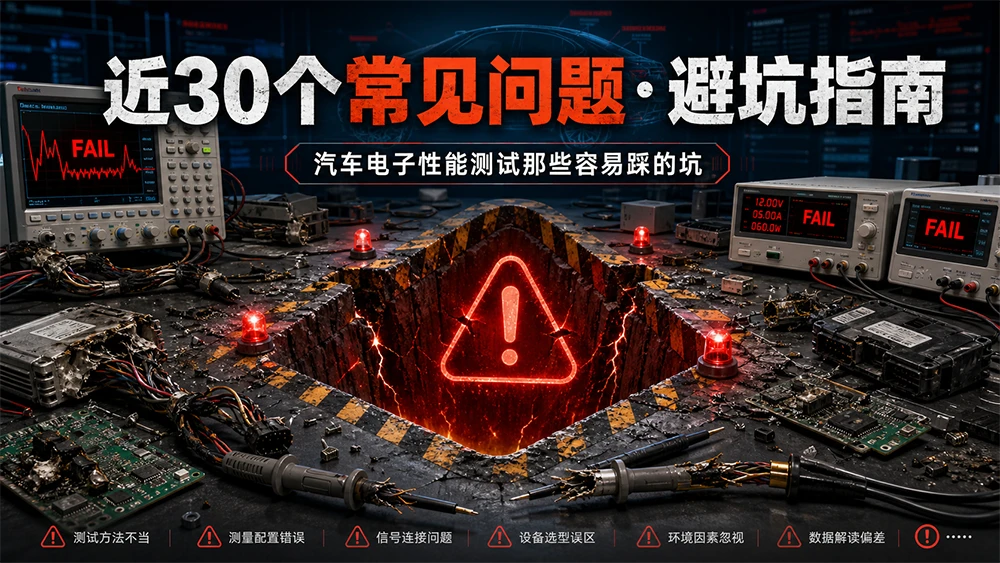
In low-voltage automotive component electrical performance testing, engineers often run into validation failures or distorted results because of standard interpretation gaps, improper equipment selection, incorrect waveform settings, and non-standard data capture. This page summarizes pitfalls seen by test engineers in real projects and outlines how Greentest's VectWorks 3.0 electrical performance test software and PTS electrical performance test systems can help build an end-to-end path from test design to compliant validation.
ISO 16750-2:2023, GB/T 45120-2024 (ISO 21780:2020), and LV148 have extended the test frequency range to 200kHz, covering the high-frequency ripple scenarios (typically between 50kHz and 200kHz) generated by DC/DC converters in new energy vehicles. This ensures the reliability of electronic equipment in the new energy vehicle environment. In contrast, the ripple frequency of alternators typically ranges from 100Hz to 10kHz, with minor variations due to engine speed fluctuations. LV124 and VW80000 (case 1-3) are limited to frequencies below 30kHz, primarily targeting the alternator ripple in conventional fuel vehicles.
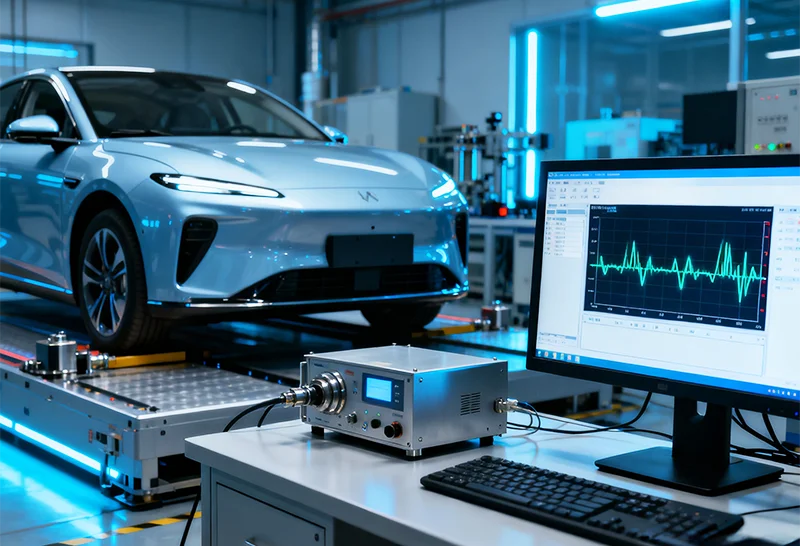
Automotive electrical system failures may lead to serious safety incidents such as short circuits, overheating, and fires. According to statistics, approximately 24% of vehicle recalls are related to electrical system issues.
Electrical performance testing can effectively identify potential risks such as insulation failure, abnormal contact resistance, and electromagnetic interference.
The necessity of on-board OBC electrical performance testing can be demonstrated from four dimensions: safety risk prevention, reliability assurance, compliance requirements, and technological adaptation.
OBC malfunctions may directly lead to serious safety hazards. For example,Insulation resistance testing and leakage current detection help prevent electric shock risks,Overvoltage and overcurrent protection tests simulate grid abnormalities to verify the response time of protection mechanisms.
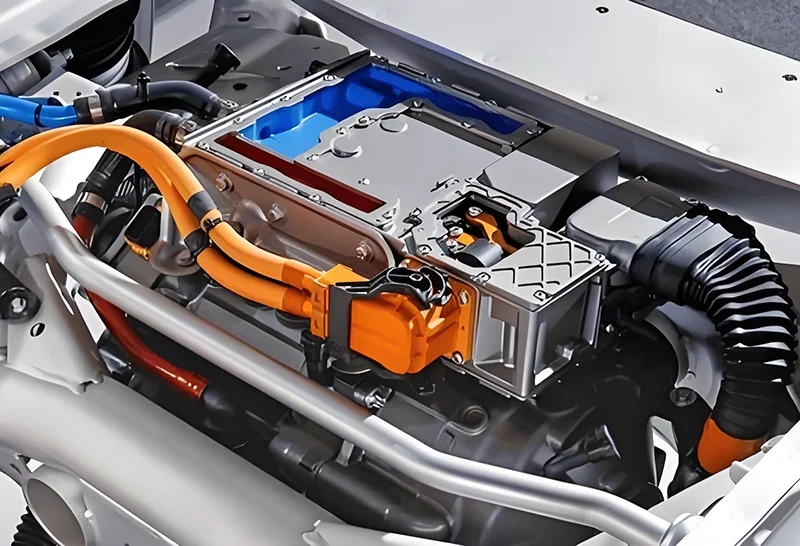
The on-board PDU (Power Distribution Unit, high-voltage power distribution box), serving as the "nerve center" of the electric vehicle's high-voltage system, is a core energy distribution component that connects the battery pack to various high-voltage electrical devices. Through key components such as contactors and copper busbars, it enables the transmission and distribution of high-voltage electrical energy. Its industrial importance has significantly increased with the expansion of the new energy vehicle market, making it an indispensable component in high-voltage systems.
The core significance of electrical performance testing can be systematically explained through a three-dimensional analytical framework of "Risk-Cost-Compliance." It demonstrates irreplaceable value in mitigating potential risks, optimizing cost structures, and ensuring regulatory compliance.