Test Systems
GtestWorks Automated Testing Platform
VectWorks 3.0 Electrical Performance Test Software


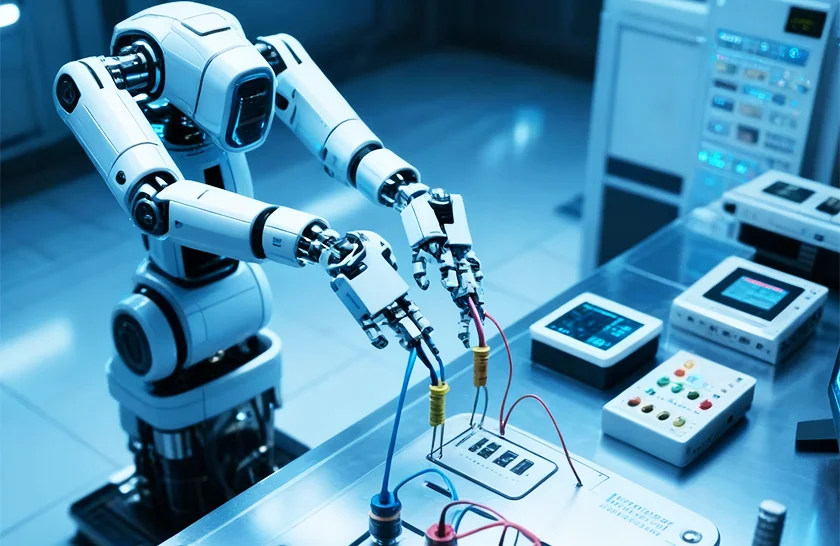
Embodied AI robots represent the convergence of artificial intelligence and robotics, marking the evolution of AI from mere code in the virtual world to entities with a physical "body" capable of perceiving and interacting with the real world. Through multimodal perception, deep reasoning, and precise manipulation, these robots are designed to become capable assistants and close companions to humans.
Embodied AI robots represent the convergence of artificial intelligence and robotics, marking the evolution of AI from mere code in the virtual world to entities with a physical "body" capable of pe···
Report Period: 2026-08-19 to 2026-08-26. This week coincides with the 2026 World Robot Congress (WRC 2026), with the industry chain showing characteristics of the "Mass Production First Year" - whole machines, components, chips, and standards advancing simultaneously.
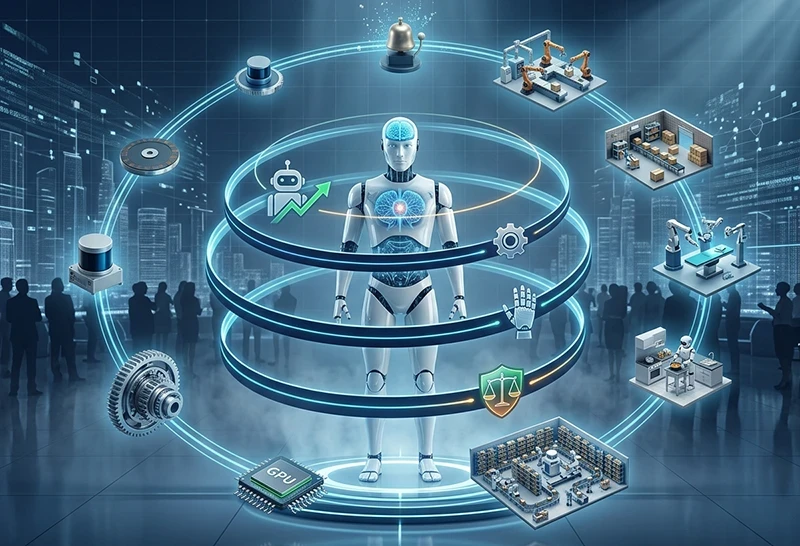
The authoritative industry report released by the Chinese Institute of Electronics at the 2026 World Robot Congress. It systematically covers the definition and scope of humanoid robots, their strategic significance and trend outlook, focuses on the industry development of five countries, maps the full industry chain, and examines seven typical application scenarios.
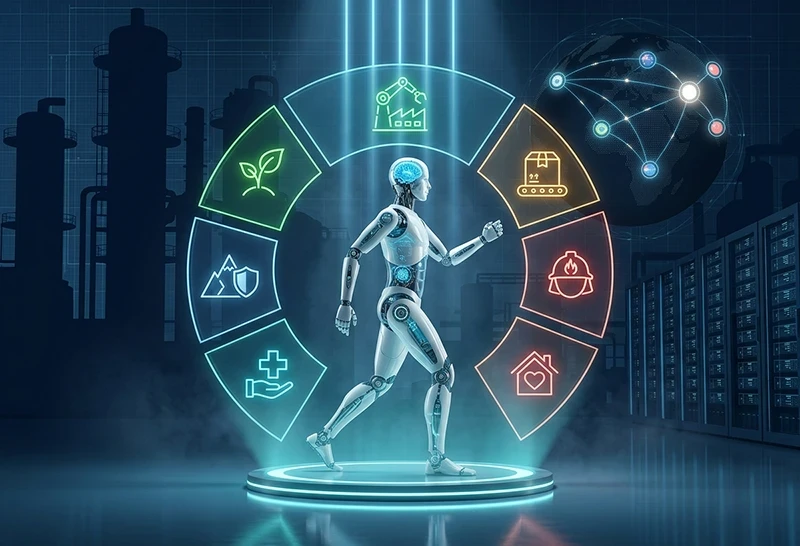
The draft for comment on the humanoid robot industry standards system construction guide released by MIIT in August 2026 systematically builds the humanoid robot standards system, covering six standards sections and 44 subclasses and setting the quantitative target of completing at least 100 key standards by 2028.
In-depth interpretation of TrendForce's latest AI Server industry research report: Liquid cooling penetration rate in AI chips will surge from 33% in 2025 to 53% in 2026 and nearly 60% in 2027. NVIDIA Vera Rubin's all-liquid cooling architecture, AMD Helios rack-level solution, and Google TPU's liquid cooling leadership drive the cold plate/CDU/manifold/QDC supply chain boom.

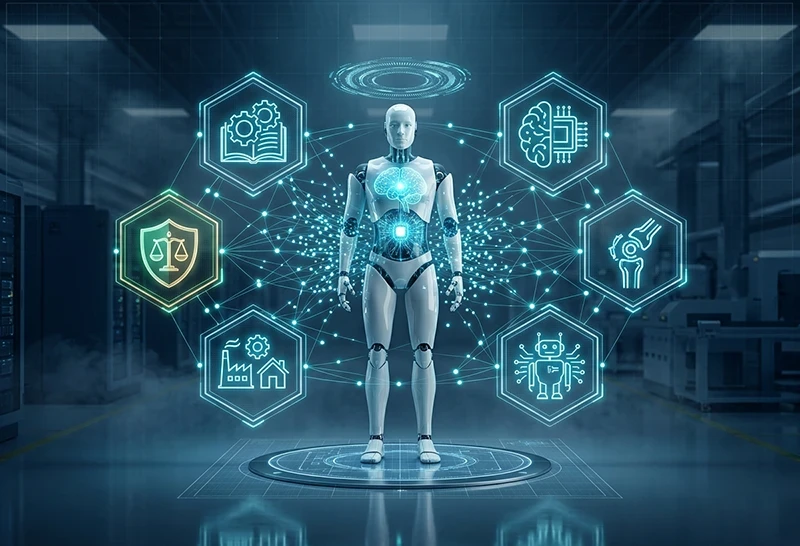
YD/T 6771-2026 is the first industry standard for embodied intelligence dataset quality approved by the Ministry of Industry and Information Technology (MIIT), officially effective on November 1, 2026. This article provides a systematic interpretation of the standard from perspectives of background, framework structure, eight quality evaluation dimensions, data production standards, organizational guarantees, evaluation methods, alignment with related standards, and industry impact.

The year 2024 is widely regarded as the first year of humanoid robot commercialization, and the global humanoid robot industry is entering a period of unprecedented development opportunities. According to the report released at the first China Humanoid Robot Industry Conference, the Chinese humanoid robot market reached approximately RMB 2.76 billion in 2024 and is expected to grow to RMB 75 billion by 2029, accounting for 32.7% of the global total. By 2035, the market size is expected to exceed RMB 300 billion.

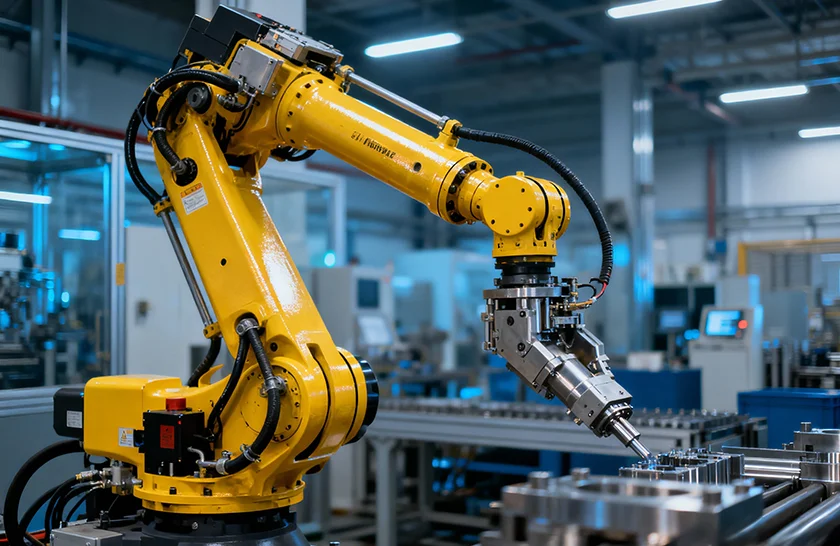
Robots, as complex systems integrating mechanics, electronics, sensing, and artificial intelligence, fundamentally depend on the quality of their electrical performance for their overall capability and reliability. Electrical performance testing runs through the entire cycle of robot R&D, production, and acceptance. It is far more than a simple power-on check; rather, it constitutes an in-depth verification and efficiency evaluation of its "life system"—the power architecture, powertrain, signal integrity, and energy management.
Electrical performance testing is not only the cornerstone for ensuring the safe and stable operation of robots and preventing electrical risks, but also a critical means to accurately quantify their working endurance, dynamic response, and energy efficiency levels, thereby ensuring that design objectives are met. Against the backdrop of robots advancing toward large-scale, industrial applications, establishing and implementing a rigorous electrical performance testing system is an imperative requirement for enhancing product competitiveness, winning market trust, and promoting the sustainable and healthy development of the industry.
GB/T 37414.3-2020 "Electrical Equipment and Systems for Industrial Robots - Part 3: Technical Requirements for AC Servo Motors" establishes unified test methods and technical requirements for AC servo motors used in industrial robots. By standardizing the fundamental requirements and performance testing of motors across different industrial application scenarios, this standard aims to enhance product accuracy, speed, and reliability, thereby strongly promoting the advancement of the industrial robot industry toward high performance and high reliability.