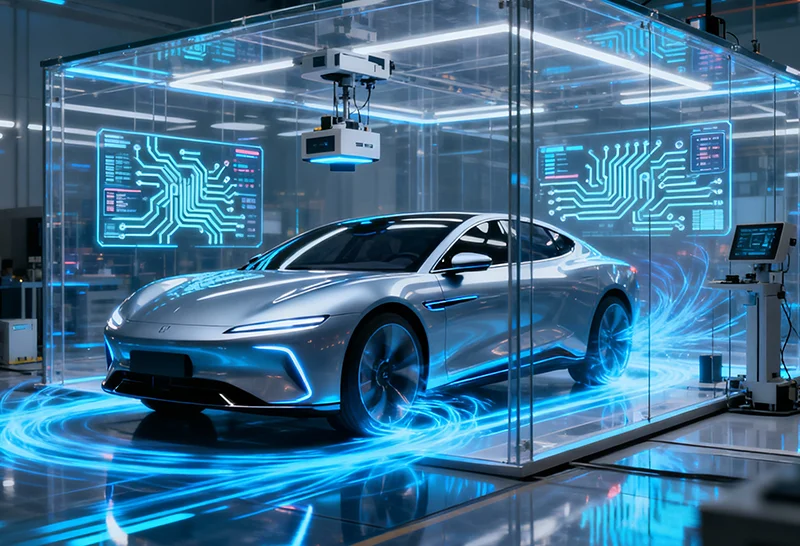
According to the International Energy Agency (IEA) forecast, the global fleet of pure electric vehicles (EVs) and hybrid electric vehicles (HEVs) on roads will reach 250 million by 2030. In 2018, IEA reported only 5.1 million such vehicles worldwide. This represents a dramatic increase, driven by mutually reinforcing technological advances in powertrains, power electronics, battery cells/packs, and charging infrastructure.
According to the International Energy Agency (IEA) forecast, the global fleet of pure electric vehicles (EVs) and hybrid electric vehicles (HEVs) on roads will reach 250 million by 2030. In 2018, IEA reported···
The ISO 16750 series applies to electrical and electronic systems/components of road vehicles. It describes potential environmental stresses and specifies tests and requirements for specific installation locations on vehicles. Its purpose is to help users systematically define and/or apply an internationally recognized set of environmental conditions, tests, and operational requirements based on the intended equipment operation and actual exposure environments.
During the development of the ISO 16750 series, the following environmental factors affecting vehicles were considered: global geography and climate, vehicle types, vehicle usage environments and operational modes, equipment lifecycle, vehicle supply voltage, and in-vehicle installation locations.

ISO 16750-2:2023, GB/T 45120-2024 (ISO 21780:2020), and LV148 have extended the test frequency range to 200kHz, covering the high-frequency ripple scenarios (typically between 50kHz and 200kHz) generated by DC/DC converters in new energy vehicles. This ensures the reliability of electronic equipment in the new energy vehicle environment. In contrast, the ripple frequency of alternators typically ranges from 100Hz to 10kHz, with minor variations due to engine speed fluctuations. LV124 and VW80000 (case 1-3) are limited to frequencies below 30kHz, primarily targeting the alternator ripple in conventional fuel vehicles.
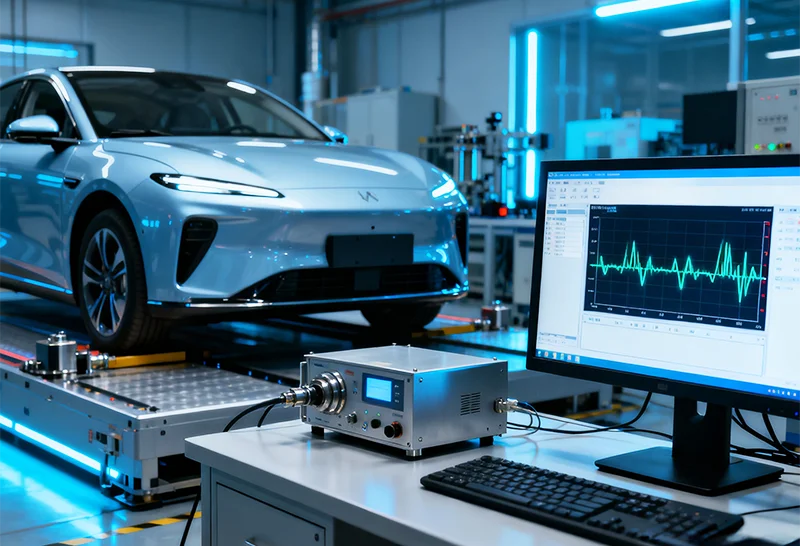
Automotive electrical system failures may lead to serious safety incidents such as short circuits, overheating, and fires. According to statistics, approximately 24% of vehicle recalls are related to electrical system issues.
Electrical performance testing can effectively identify potential risks such as insulation failure, abnormal contact resistance, and electromagnetic interference.
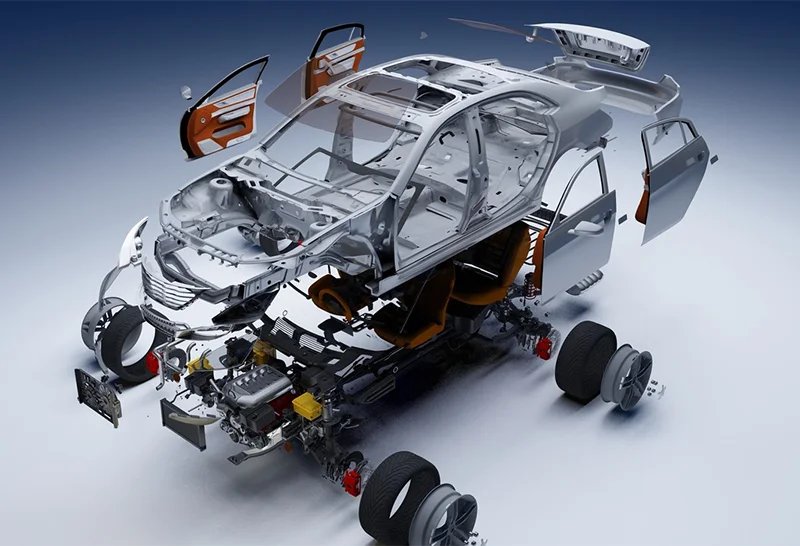
The necessity of on-board OBC electrical performance testing can be demonstrated from four dimensions: safety risk prevention, reliability assurance, compliance requirements, and technological adaptation.
OBC malfunctions may directly lead to serious safety hazards. For example,Insulation resistance testing and leakage current detection help prevent electric shock risks,Overvoltage and overcurrent protection tests simulate grid abnormalities to verify the response time of protection mechanisms.
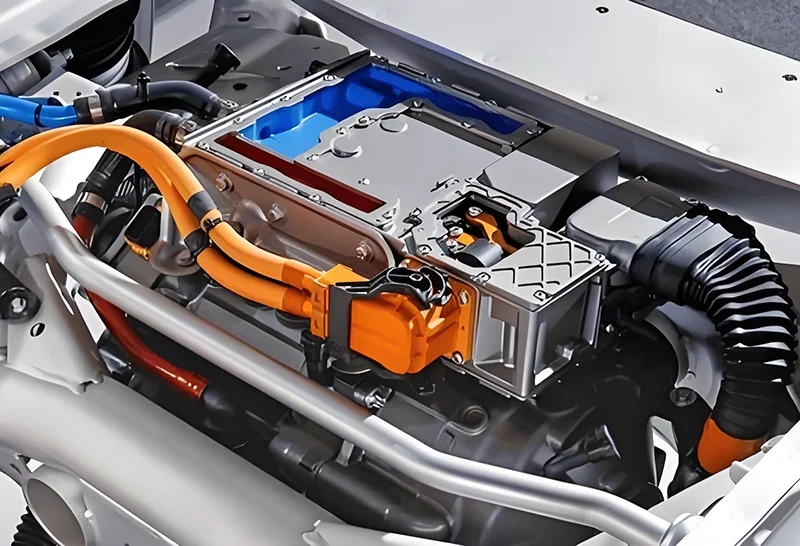
The on-board PDU (Power Distribution Unit, high-voltage power distribution box), serving as the "nerve center" of the electric vehicle's high-voltage system, is a core energy distribution component that connects the battery pack to various high-voltage electrical devices. Through key components such as contactors and copper busbars, it enables the transmission and distribution of high-voltage electrical energy. Its industrial importance has significantly increased with the expansion of the new energy vehicle market, making it an indispensable component in high-voltage systems.
The core significance of electrical performance testing can be systematically explained through a three-dimensional analytical framework of "Risk-Cost-Compliance." It demonstrates irreplaceable value in mitigating potential risks, optimizing cost structures, and ensuring regulatory compliance.
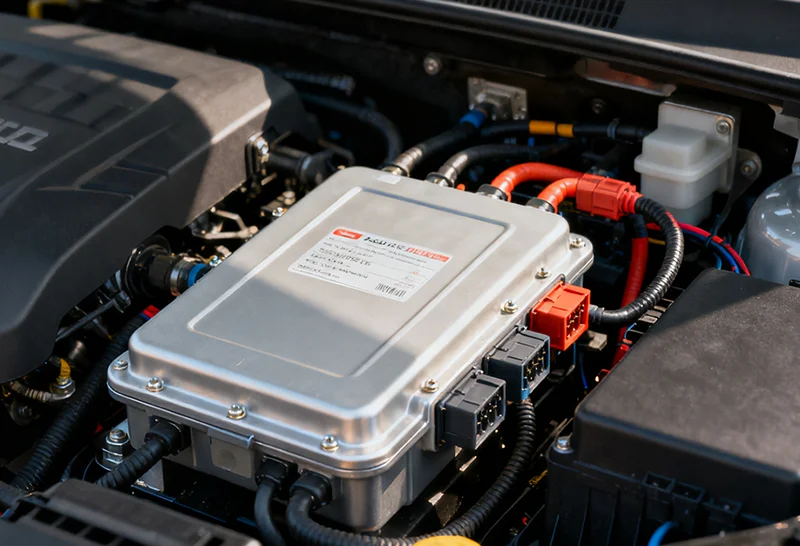
On-board Electronic Control Units (ECUs), recognized as the core control modules of vehicle electronic systems, are often referred to as the "vehicle's central computer" or "on-board brain." Their functions span critical areas including powertrain control (such as fuel injection and ignition timing), safety system management (like Electronic Stability Program - ESP and brake control), and overall vehicle status coordination. With the continuous advancement of automotive electronics, modern vehicles now incorporate over 80 ECUs per unit, whose reliability directly determines the vehicle's safety, dynamic performance, and regulatory compliance.
On-board DC-DC Converters as the "Vehicle Energy Nerve Center"The on-board DC-DC converter plays a critical role in the energy management system of electric vehicles. Its core function is to convert high-voltage direct current (typically 300-800V) from the power battery pack into stable low-voltage direct current (e.g., 12V, 24V, or 48V) required by auxiliary systems. This powers entertainment systems, lighting systems, power steering, air conditioning, and other auxiliary devices, while ensuring the stable operation of the vehicle’s low-voltage electrical and control systems.
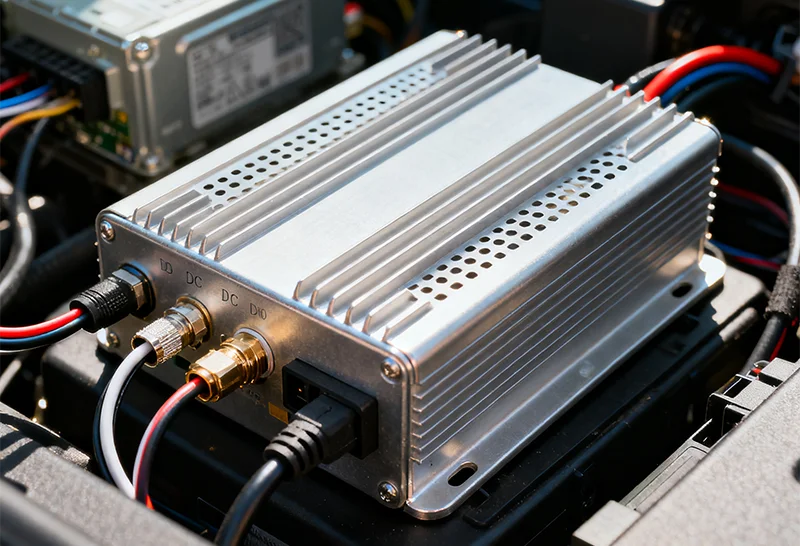
VW 80000:2021 is an electrical and electronic component testing standard developed by the Volkswagen Group, comprising 24 test items from E-01 to E-24. It covers the performance testing requirements for electrical and electronic components under various voltage conditions.
MBN LV124-1 2013 is an electrical and electronic component testing standard established by Mercedes-Benz, consisting of 22 test items from E-01 to E-22. While it shares significant similarities with the VW 80000:2021 standard in terms of test item structure, there are differences in specific parameter requirements.
ISO 16750-2:2023, as the international standard for electrical load testing of road vehicle electrical and electronic equipment, was officially released in July 2023, fully replacing the 2012 version. In response to the technological changes in new energy vehicles and intelligent connected vehicles, this standard adds 15 test items, focusing on strengthening electrical environment adaptability and complex working condition simulation capabilities.
With the continuous advancement of automotive electrification, traditional 12V power supply systems can no longer meet the demands of high-power equipment such as intelligent driving and by-wire chassis. As a transitional solution, the 48V low-voltage system quadruples power transmission capability without significantly increasing costs, effectively addressing the power limitations of 12V systems. In this context, GB/T 45120-2024 has been introduced to standardize the technical requirements and testing methods for 48V systems, promoting industry-wide standardization.